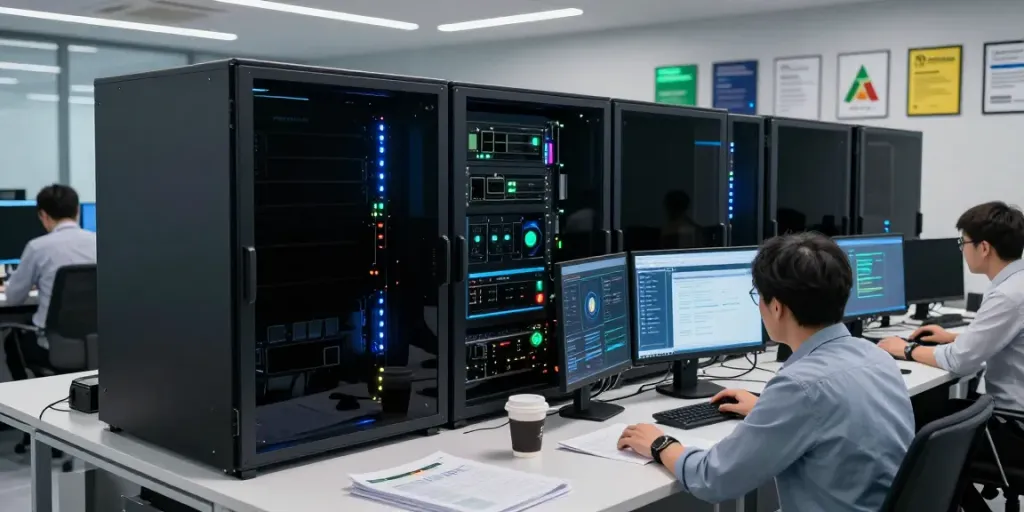
Understanding AI Infrastructure: The Foundation of AI Technologies
As we navigate through the complexities of the digital age, the term AI infrastructure becomes increasingly relevant. It encompasses not only the physical hardware and software components necessary for AI development but also the strategic frameworks that underlie their integration and functionality. This article delves into the core components of AI infrastructure, its criticality in fostering innovation, and the role that energy efficiency plays in AI operations.
What is AI infrastructure?
AI infrastructure refers to the suite of hardware, software, and network resources that enable the development, training, and deployment of AI models. It includes everything from powerful GPUs and TPUs that perform complex computations to the data storage services that handle large datasets. AI infrastructure supports the end-to-end lifecycle of AI applications, ensuring they are both scalable and efficient.
Components of a robust AI infrastructure
- Computational Hardware: Central Processing Units (CPUs), Graphics Processing Units (GPUs), and Tensor Processing Units (TPUs) designed to handle the intensive computations required by AI algorithms.
- Data Storage Solutions: High-speed storage solutions like SSDs and object storage systems that can handle large volumes of data efficiently.
- Networking: High-bandwidth, low-latency connectivity solutions that facilitate rapid data transfer between nodes in the infrastructure.
- Software Frameworks: AI frameworks and libraries such as TensorFlow, PyTorch, and Apache MXNet that simplify the development process for data scientists and engineers.
Importance of energy efficiency in AI operations
One of the most critical challenges facing AI infrastructure today is energy consumption. High-density computing environments require substantial power and cooling resources. As AI applications scale, the demand for energy-efficient solutions becomes paramount to not only reduce operational costs but also to minimize environmental impact. Sustainable technologies and practices can significantly enhance the overall resilience and efficiency of AI infrastructures.
The Role of Participation in the AI Token Economy
Participation in the AI Token Economy has transformed the way stakeholders engage with AI technologies. It encourages contributions from various actors—individuals, enterprises, and power providers—creating a symbiotic ecosystem that drives growth and innovation in AI infrastructure.
How participation models work in AI infrastructure
In the context of AI infrastructure, participation models provide different pathways for stakeholders to contribute resources, whether in the form of computing power, energy, or financial support. These models often involve incentive structures that reward participants based on their contributions to the overall system, ensuring that resources are allocated efficiently and equitably.
Benefits of contributing to AI token operations
Contributing to AI token operations allows individuals and enterprises to be part of a growing economy without the need for significant capital investment. Participants can support AI workloads, receive measurable rewards based on their contributions, and help facilitate the rapid deployment of AI services across various applications. Moreover, engaging in token operations fosters a sense of community among participants, enhancing collaboration and knowledge sharing.
Understanding your contribution metrics
Participation in the AI Token Economy is underpinned by a clear understanding of contribution metrics. These metrics typically include the amount of energy consumed, the computational resources provided, and the associated token generation. By measuring and tracking these components, participants can assess their performance and optimize their strategies within the ecosystem.
Types of AI Infrastructure Power Plans Available
Choosing the right AI infrastructure power plan is essential to maximizing the benefits of participation in the AI Token Economy. Various plans cater to different needs, allowing participants to select options based on their capacity, duration of engagement, and operational profiles.
Core vs. Enhanced Power Access: What’s the difference?
Core Power Access typically includes the basic resources necessary to support standard AI workloads. In contrast, Enhanced Power Access offers additional features such as improved energy efficiency and prioritized resource allocation. Understanding these distinctions helps participants align their operational needs with the right power plan.
Choosing the right power plan for your needs
When selecting an AI infrastructure power plan, it's important to consider factors such as the scale of operations, specific workload requirements, and long-term goals. Participants should evaluate the power support levels, duration of commitment, and potential rewards associated with each plan to make informed decisions.
Long-term vs. short-term participation considerations
Deciding between long-term and short-term participation involves assessing the trade-offs between commitment and flexibility. While long-term participation can yield more significant rewards and stability, short-term engagements allow for quick adaptation to changing technological landscapes and operational demands. Participants should weigh these factors based on their strategic objectives.
Challenges in Building and Maintaining AI Infrastructure
Despite the rapid advancements in AI technology, several challenges persist in the building and maintenance of AI infrastructure. Understanding these challenges can help organizations better prepare and implement solutions effectively.
Common misconceptions about AI infrastructure
One prevalent misconception is the belief that building AI infrastructure requires immense capital and resources. In reality, many cloud-based solutions offer scalable options that democratize access to AI capabilities. This allows smaller enterprises and individual participants to engage without the need for substantial upfront investments.
Addressing scalability and efficiency challenges
As AI workloads continue to grow, scalability becomes a critical issue. Organizations must invest in flexible architectures and solutions that can accommodate varying workloads while maintaining operational efficiency. Techniques such as containerization and orchestration can play a significant role in achieving this scalability.
Technological advancements and their implications
Continuous technological advancements bring both opportunities and challenges. The emergence of new AI frameworks, hardware accelerators, and energy-efficient technologies can improve overall performance but may require retraining personnel and updating existing systems. Organizations must remain adaptable to leverage these advancements effectively.
Future Trends in AI Infrastructure by 2026
Looking ahead, several trends are expected to shape the future of AI infrastructure. By staying informed, organizations can strategically align their operations with these developments.
Emerging technologies shaping AI infrastructure
Technologies such as quantum computing, edge computing, and advanced networking solutions are poised to revolutionize AI infrastructure. These innovations promise to enhance processing capabilities, reduce latency, and create more energy-efficient solutions for AI workloads.
Predictions for AI infrastructure evolution
It is anticipated that AI infrastructure will become increasingly modular, allowing organizations to customize their setups according to specific needs. This modularity will enhance flexibility and encourage the adoption of best practices across diverse industries.
Preparing for the integration of renewable energy sources
As sustainability becomes a pivotal concern, the integration of renewable energy into AI operations will gain momentum. Organizations will need to evaluate their energy consumption and seek partnerships to transition to greener alternatives, ultimately reducing their carbon footprint.
What are AI infrastructure career paths?
The increasing demand for AI capabilities is generating new career paths within the AI infrastructure field. Roles such as AI infrastructure engineer, data architect, and cloud operations manager are becoming more prominent, with professionals required to possess a blend of technical expertise and strategic insight.
Who are the major players in AI infrastructure today?
Several companies are spearheading advancements in AI infrastructure, including established tech giants like NVIDIA, Google, and Amazon Web Services. These organizations are continually investing in innovative solutions to maintain their competitive edge and support the evolving needs of the AI sector.
What challenges do startups face in AI infrastructure?
Startups in the AI infrastructure space often face the challenge of navigating limited resources while competing against larger players. Building a sustainable business model involves strategic partnerships, investment in R&D, and a laser focus on niche applications where they can excel.
How can organizations optimize their AI infrastructure?
Optimization of AI infrastructure can be achieved through regular assessments of resource utilization, adopting flexible computing environments, and implementing best practices in data management. Continuous learning and adaptation will be key drivers of success.
What is the significance of modular AI infrastructure?
Modular AI infrastructure allows organizations to adapt their capabilities as needs evolve, enabling them to remain agile in a rapidly changing landscape. This flexibility can lead to more efficient resource allocation, higher performance, and reduced costs over time.